
Intelligence Discovery

204 matching items

Search All Intelligence

Search across titles, summaries, full article bodies, CVE identifiers, and advisory numbers, and refine results by type, region, severity, or date range.

Filters sync to URL parameters for shareable views.

Showing 191–200 of 204 records · Sorted newest first

Page 20 / 21
HighRegion TelemetryAPAC
Singapore Cyber Landscape 2024/2025: Critical Infrastructure & APT Defense
Image:Cyber Security Agency of Singapore

Singapore Cyber Landscape 2024/2025: Critical Infrastructure & APT Defense

CSA Singapore details regional ransomware trends, compromised edge firmware, and targeted APT activity against Southeast Asian critical infrastructure.

Published September 3, 2025, Singapore Cyber Landscape 2024/2025 reports an accelerating threat tempo driven by Malware-as-a-Service, unpatched consumer and enterprise edge devices, and persistent APT targeting of Critical Information Infrastructure, prompting expanded zero-trust and MFA mandates.

Source: Cyber Security Agency of Singapore (CSA)
CriticalGlobal ThreatGlobal
AA25-203A
#StopRansomware: Interlock Double-Extortion Ransomware Campaign
Image:RELIABLIXSHIELD — site-designed thumbnail

#StopRansomware: Interlock Double-Extortion Ransomware Campaign

Actor / Campaign: Interlock ransomware actors

Joint CISA and FBI advisory detailing Interlock ransomware operations targeting commercial enterprises and critical infrastructure across North America and Europe.

First observed in September 2024, Interlock threat actors employ drive-by compromise and ClickFix-style social engineering lures—including fake browser updates and CAPTCHA prompts—to deploy remote access trojans and credential stealers before encrypting Windows and Linux virtualized environments.

Source: CISA / FBI / HHS / MS-ISAC Advisory AA25-203A
HighGlobal ThreatGlobal
AA25-050A
#StopRansomware: Ghost (Cring) Ransomware Exploiting Edge Flaws
Image:RELIABLIXSHIELD — site-designed thumbnail

#StopRansomware: Ghost (Cring) Ransomware Exploiting Edge Flaws

Actor / Campaign: Ghost (also tracked as Cring, Crypt3r, Phantom, and Strike)

CISA, FBI, and international partners warn of Ghost ransomware actors attacking unpatched internet-facing appliances across more than 70 countries.

Advisory AA25-050A documents Ghost (also tracked as Cring, Crypt3r, Phantom, and Strike) indiscriminately exploiting publicly disclosed vulnerabilities in outdated Adobe ColdFusion, Microsoft SharePoint, Microsoft Exchange, and Fortinet FortiOS systems to deploy web shells and Cobalt Strike beacons.

Source: CISA / FBI / MS-ISAC Advisory AA25-050A
AnalysisEditorial BriefEMEA
· 4 min read
Eradicating Trivial Vulnerabilities, at Scale
Image:UK National Cyber Security Centre

Eradicating Trivial Vulnerabilities, at Scale

By Ollie N (Head of Vulnerability Management Team, NCSC)

UK NCSC research examines how memory-safe engineering, secure defaults, and platform-level guardrails can eliminate entire classes of 'unforgivable' software bugs.

Published January 28, 2025 by the UK National Cyber Security Centre, this engineering analysis outlines practical steps for technology vendors to prevent recurring, easily avoidable vulnerabilities—such as command injection, path traversal, and default credentials—through architectural guardrails rather than reactive patching alone.

The analysis distinguishes between structural software complexity and preventable defect classes, encouraging engineering organizations to adopt memory-safe languages, safe-by-default frameworks, and automated build-time checks that systematically remove entire vulnerability families across large codebases.

Source: UK National Cyber Security Centre (NCSC)
AnalysisEditorial BriefAmericas
· 4 min read
Building a Secure by Design Ecosystem
Image:CISA

Building a Secure by Design Ecosystem

By Jen Easterly

CISA outlines why software manufacturers must shift security ownership upstream through secure-by-default configurations, MFA enforcement, and transparent disclosure.

Authored by CISA Director Jen Easterly on January 13, 2025, this essay argues that end-users and small organizations should not bear disproportionate risk for insecure defaults. Through the Secure by Design Pledge and international partner guidance, software producers are adopting measurable commitments to eliminate default passwords and enable audit logging at no extra cost.

By embedding security controls into the software development lifecycle—alongside phishing-resistant multi-factor authentication, transparent vulnerability disclosure, and Software Bills of Materials (SBOMs)—manufacturers reduce the operational burden placed on defenders across critical infrastructure.

CriticalGlobal ThreatGlobal
CVE-2024-1709AA24-131A
#StopRansomware: Black Basta Operations Against Critical Infrastructure
Image:RELIABLIXSHIELD — site-designed thumbnail

#StopRansomware: Black Basta Operations Against Critical Infrastructure

Actor / Campaign: Black Basta RaaS affiliates

Updated joint advisory outlines Black Basta affiliate intrusions spanning 12 of 16 U.S. critical infrastructure sectors via social engineering and RMM abuse.

Advisory AA24-131A (updated November 8, 2024) notes that Black Basta affiliates have impacted over 500 organizations globally, combining spearphishing, email-bombing plus Microsoft Teams/helpdesk vishing lures, and exploitation of public-facing flaws such as CVE-2024-1709 to deploy Qakbot, Cobalt Strike beacons, Backstab EDR evasion tooling, and double-extortion ChaCha20/RSA-4096 payloads.

Source: CISA / FBI / HHS / MS-ISAC Advisory AA24-131A
HighRegion TelemetryAmericas
Canadian Cyber Centre: National Cyber Threat Assessment 2025–2026
Image:Canadian Centre for Cyber Security

Canadian Cyber Centre: National Cyber Threat Assessment 2025–2026

North American threat assessment warns of state-sponsored pre-positioning in critical infrastructure and persistent Cybercrime-as-a-Service disruption.

Released October 30, 2024 by the Canadian Centre for Cyber Security, the 2025–2026 assessment identifies state-sponsored cyber operations and ransomware-as-a-service ecosystems as the foremost risks to North American critical infrastructure, democratic institutions, and intellectual property.

Source: Canadian Centre for Cyber Security
CriticalGlobal ThreatGlobal
AA24-242A
#StopRansomware: RansomHub RaaS Targeting Critical Sectors
Image:RELIABLIXSHIELD — site-designed thumbnail

#StopRansomware: RansomHub RaaS Targeting Critical Sectors

Actor / Campaign: RansomHub RaaS (formerly tracked as Cyclops and Knight)

RansomHub absorbed former LockBit and ALPHV affiliates to compromise at least 210 organizations across water, IT, healthcare, and emergency services.

Published by CISA, FBI, MS-ISAC, and HHS, Advisory AA24-242A details how RansomHub affiliates gain initial access through phishing, password spraying, and exploitation of known vulnerabilities in VPNs and remote management tools, followed by living-off-the-land reconnaissance and data exfiltration.

Source: CISA / FBI / HHS / MS-ISAC Advisory AA24-242A
HighCVE AdvisoryGlobal
CVE-2024-6387CVSS 8.1
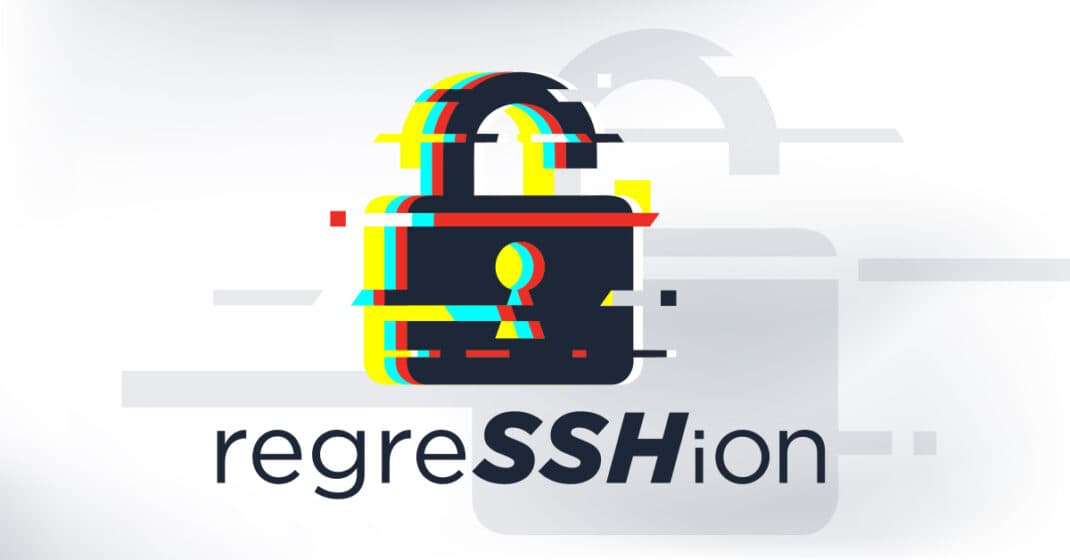
OpenSSH Server (sshd) Signal Handler Race Condition (regreSSHion)
Image:Qualys Threat Research Unit

OpenSSH Server (sshd) Signal Handler Race Condition (regreSSHion)

Affected Product: OpenSSH sshd (8.5p1–9.7p1 on glibc Linux)

A regression in OpenSSH signal handling creates an unauthenticated remote code execution race condition as root on glibc Linux hosts.

CVE-2024-6387, scored 8.1 High under CVSS v3.1, reintroduces a signal handler race condition in sshd when a client fails to authenticate within LoginGraceTime (default 120 seconds). Affecting OpenSSH versions 8.5p1 through 9.7p1 on glibc-based Linux systems, successful exploitation yields root code execution without credentials.

The vulnerability was fixed in OpenSSH 9.8p1 and backported across major Linux distributions; setting LoginGraceTime to 0 in sshd_config mitigates the race condition at the trade-off of potential connection-slot exhaustion.

Source: Red Hat CNA / CVE Program
CriticalCVE AdvisoryGlobal
CVE-2024-4577CVSS 9.8
PHP-CGI on Windows Best-Fit Encoding Argument Injection
Image:RELIABLIXSHIELD — site-designed thumbnail

PHP-CGI on Windows Best-Fit Encoding Argument Injection

Affected Product: PHP 8.1 (< 8.1.29), 8.2 (< 8.2.20), 8.3 (< 8.3.8) in CGI mode on Windows

Windows code-page best-fit character mapping allows unauthenticated remote attackers to inject CLI arguments into PHP running in CGI mode.

Scored 9.8 Critical under CVSS v3.1, CVE-2024-4577 affects PHP 8.1 before 8.1.29, 8.2 before 8.2.20, and 8.3 before 8.3.8 running on Windows with Apache and PHP-CGI under affected locales. Windows converts soft-hyphen characters into standard hyphens, bypassing earlier CVE-2012-1823 mitigations and enabling remote code execution.

The PHP Group released patched versions 8.1.29, 8.2.20, and 8.3.8 and advised administrators to migrate away from legacy PHP-CGI deployments where possible.

Source: PHP Group / CVE Program
Search Intelligence | RELIABLIXSHIELD News